
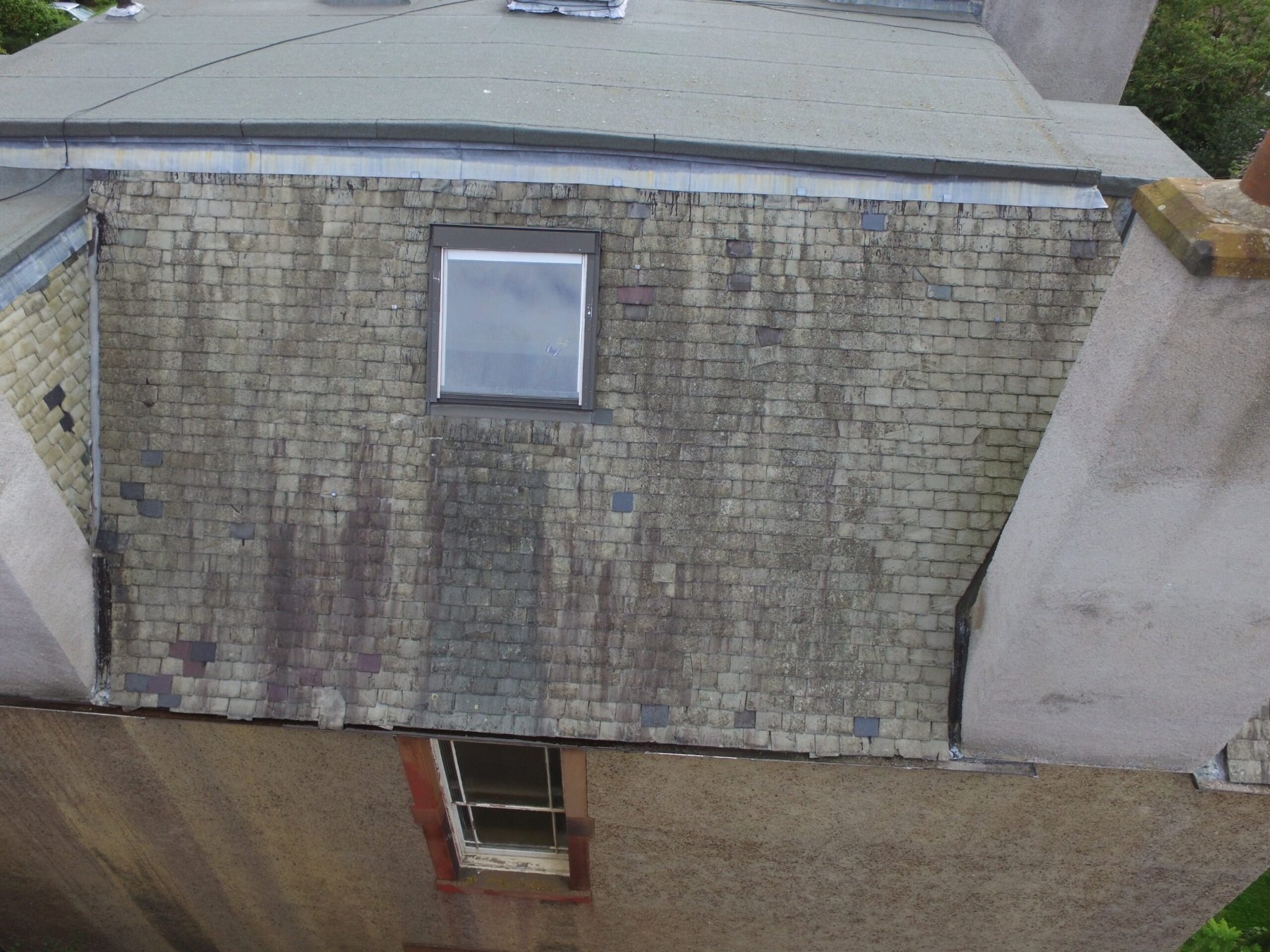
Natural slate roofs are one of the most durable parts of Edinburgh’s older buildings, and many have lasted well over a century. Even so, every slate roof reaches a point where repairs stop being good value and re-slating becomes the sensible option. Knowing the signs helps you plan the work before water damage forces the decision.
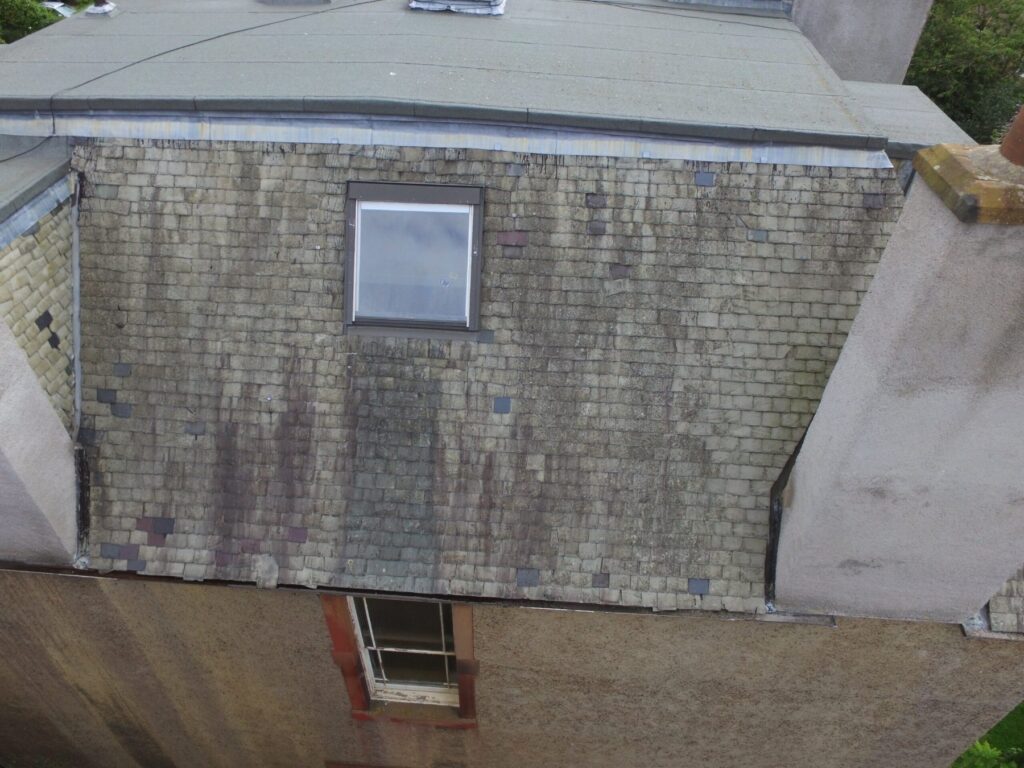
1. Slates keep slipping or breaking
The odd slipped slate after a storm is normal. If you are replacing slates regularly, or finding broken pieces in the gutter every winter, the roof may be failing as a whole.
- Nail sickness: the original iron nails have corroded and no longer hold the slates
- Rotten sarking or battens: the timber the slates are fixed to has been weakened by damp
- Perished underlay: where there is underlay, it may have broken down
If only a few slates are affected, a roof repair may be all you need. A photo inspection shows how widespread the problem is before you decide.
2. Water staining or damp inside
- Brown stains on ceilings or walls on the top floor
- Damp patches around chimneys, rooflights or valleys
- A musty smell or mould in the loft
If leaks appear in several places, or come back after repair, it usually means the slates, fixings or timbers are reaching the end of their life rather than one isolated defect.
3. Delaminating or soft slates
Over decades, poorer slate can start to delaminate, splitting into thin layers and becoming soft or powdery. Once this is widespread, replacing individual slates no longer protects the roof.
- Flaking or powdery slate surfaces
- Slates that crumble when handled
- Moss and lichen spreading quickly across large areas
When re-slating, sound original slate can often be sorted and reused, with the shortfall made up in new or reclaimed slate matched for size and colour. Common choices are reclaimed Scottish slate for traditional and listed buildings, Welsh slate, and Spanish slate where planning allows.
4. Corroded fixings and failed leadwork
A slate roof depends on its metalwork as much as the slate itself. Common problems include:
- Corroded nails letting slates slip (nail sickness)
- Cracked or split lead flashings at chimneys and wall junctions
- Loose ridges and failed mortar letting water in at the apex
Leadwork should follow recognised good practice: the right code of lead for the job, sensible lengths with proper laps, and details that allow for expansion. Historic Environment Scotland’s guide on roofing leadwork is a useful reference.
5. The roof has reached the end of its life
Even with good roof maintenance, every roof has a limit set by the quality of the materials, the exposure and how well it was laid. Typical ranges are:
| Roof covering | Typical life* |
|---|---|
| Natural slate (good quality) | 75–100+ years |
| Clay tile | 50–70 years |
| Concrete tile | 40–60 years |
*Ranges are typical, not guaranteed. Actual life depends on material quality, exposure, installation and maintenance.
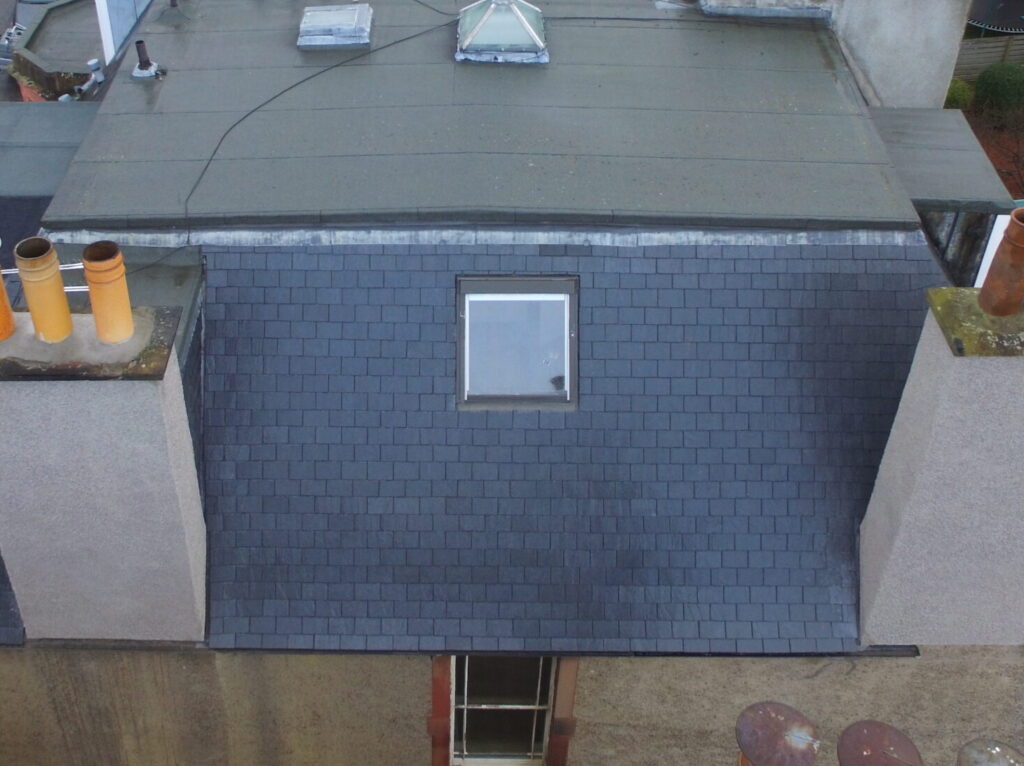
As a rule of thumb, once a large share of the slates or fixings are failing, re-slating is usually better value than repeated repairs. See new roofs for how a re-slate is carried out.
Repair or re-slate: what affects the decision
- How widespread the problem is. A few slipped slates in one area is a repair. Failing nails or slate across a whole slope is a re-slate.
- The condition of the sarking and timbers. If the boards are sound, re-slating can reuse them. Widespread rot adds to the cost and favours doing the job once.
- How many repairs have already been done. A roof covered in old tingles and patch repairs is usually telling you something.
- Access costs. If scaffolding is needed for repeated repairs, the access cost can quickly approach a large part of a re-slate.
- Shared roofs and listed buildings. On tenements the decision is shared between owners, and on listed buildings or in conservation areas the materials may need approval. Both take time to organise, so plan ahead.
What happens during a re-slate
The slopes are stripped and the slates sorted, keeping sound slate for reuse. The sarking is inspected and repaired, a breathable underlay and battens are fitted where specified, and the roof is slated with copper nails. Leadwork, valleys and ridges are usually renewed at the same time, which avoids a second scaffold later.
Need a hand with this?
If your slate roof is showing these signs, we can inspect it and tell you whether repair or re-slating makes more sense. See our new roofs page, or request a quote and send us a photo. You can also call 0131 235 1019.