
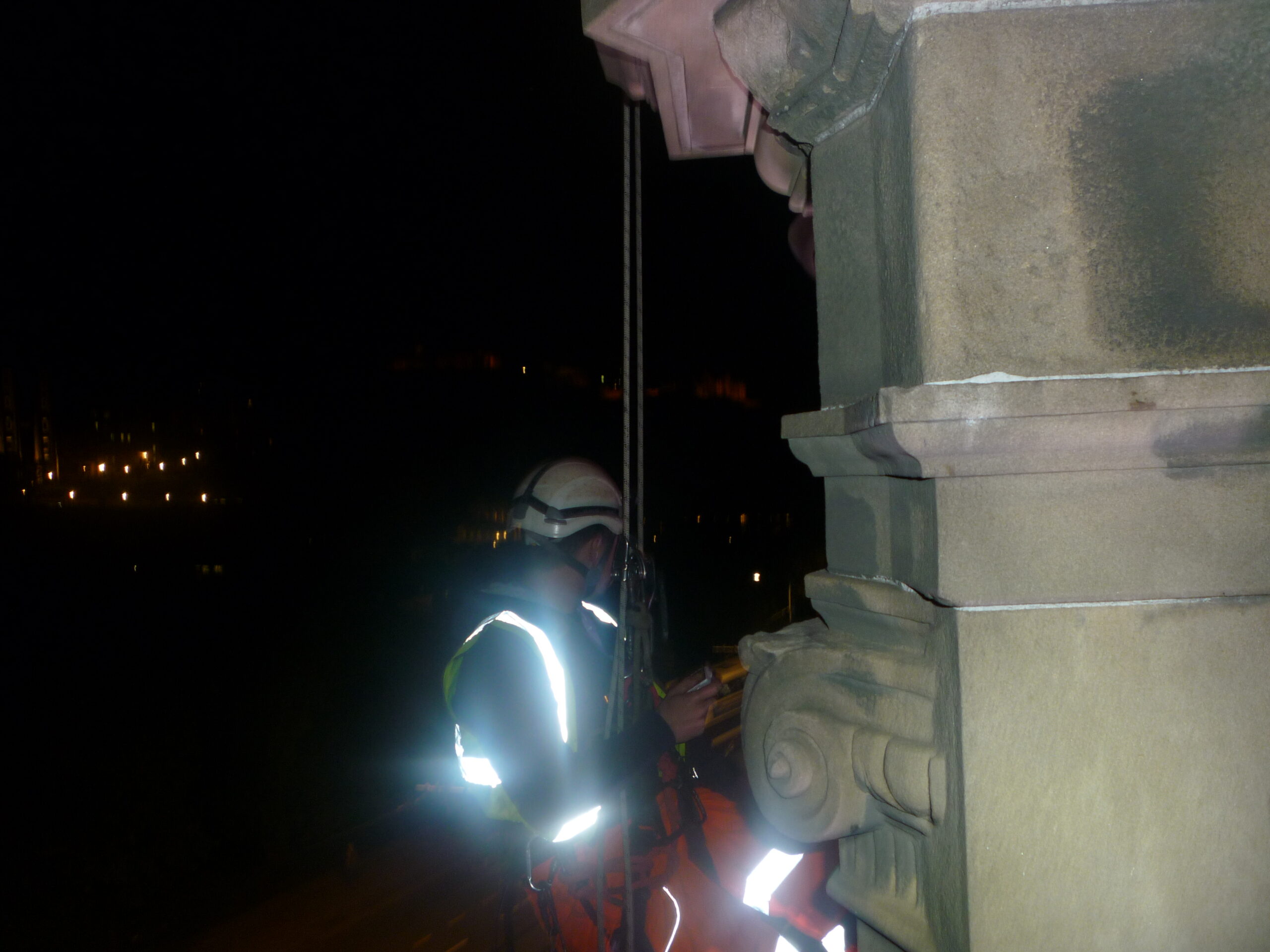
Loose slates, coping stones and fragments of masonry falling from buildings are a long-standing safety problem in Edinburgh. Much of the city is built from sandstone that has been weathering for well over a century, and many of the high-level parts of these buildings, such as chimneys, skews, parapets and cornices, are rarely inspected up close.
This article explains why falling masonry happens, what property owners are responsible for, and why a close-up inspection is the most reliable way to find problems before something falls.
How big is the problem?
Reported incidents of falling masonry in Edinburgh rose from just over 50 to almost 180 a year between 2014 and 2018, according to figures reported by The Scotsman. The incidents ranged from slates slipping onto pavements to stones falling from parapets and pieces of render breaking away from facades.
One factor often linked to the increase is the end of the council’s statutory repairs system, which had been used to enforce repairs on shared buildings. After the statutory repairs scandal the scheme was suspended, leaving owners of shared buildings to organise repairs between themselves.
Where falling masonry comes from
- Chimney stacks: eroded pointing, loose copes and cracked or loose chimney pots
- Skews and parapets: coping stones that have lost their bedding or fixings
- Cornices and string courses: projecting stone that has weathered and cracked
- Slates and ridges: slipped slates and loose ridge tiles after high winds
- Render and repairs: old cement patches and render coming away from the stone
Why visual checks and drone surveys are not enough
Drones are useful for a quick overview of a roof or elevation and for spotting obvious defects. What a camera cannot do is tell whether a stone is actually secure. A coping, chimney pot or piece of cornice can look sound in a photo and still move when touched.
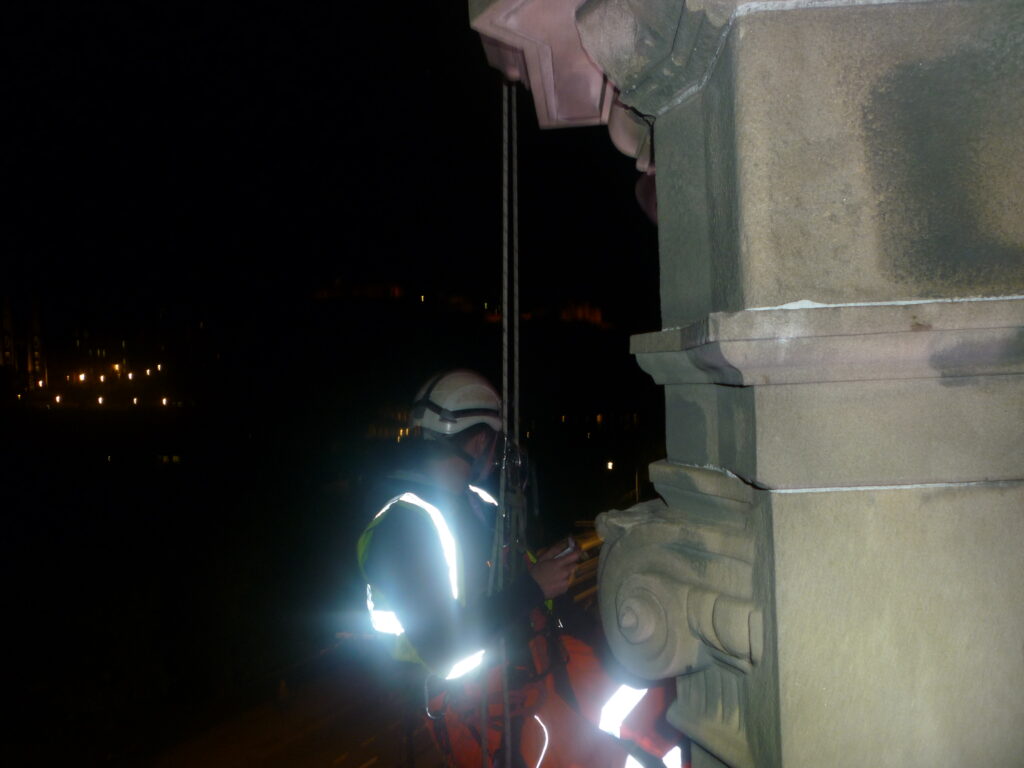
A close-up inspection from rope access, scaffolding or a powered platform allows the inspector to check for movement, sound the stone and look at the joints and fixings properly.
The value of a close-up inspection
For most Edinburgh buildings the practical approach is to combine an overview, from the ground or a drone, with a close-up inspection of the high-risk areas: chimneys, skews, copes, wall heads and cornices. Where the inspection is carried out by tradespeople, loose material can often be removed or made safe during the same visit, and the findings are recorded with photos so owners can plan the remaining repairs.
A typical close-up inspection covers:
- chimney stacks, pots, flaunching and pointing
- skews, copes and parapets, including their bedding and fixings
- cornices, string courses and other projecting stone
- slates, ridges and leadwork near the wall head
- gutters and downpipes, which often cause the stone decay in the first place
See building inspections for what an inspection includes and what you receive afterwards.
Property owner liability
Owners are responsible for keeping their property in a condition that does not put other people at risk. If a slate or stone falls and injures someone or damages property, the owner may face a claim for compensation, and an insurer may question a claim if there is no record of the building being maintained.
For tenements, the Tenements (Scotland) Act 2004 sets out how owners share responsibility for common parts such as the roof and chimneys. The City of Edinburgh Council also publishes guidance on shared repairs, including how to organise work with other owners.
This article is general information, not legal advice. If you are unsure about your responsibilities, speak to a solicitor or your factor.
What property owners should do
- Arrange a close-up inspection of chimneys, skews, copes and parapets, particularly on older sandstone buildings.
- Deal with urgent defects quickly, such as loose stone or slipped slates over a pavement.
- Keep records and photos of inspections and repairs.
- For shared buildings, agree a maintenance plan with the other owners or your factor.
Need a hand with this?
If you are worried about loose stonework or a chimney on your building, we can inspect it and make it safe. See our stonemasonry page, or request a quote and send us a photo. You can also call 0131 235 1019.