
Rope access building repairs
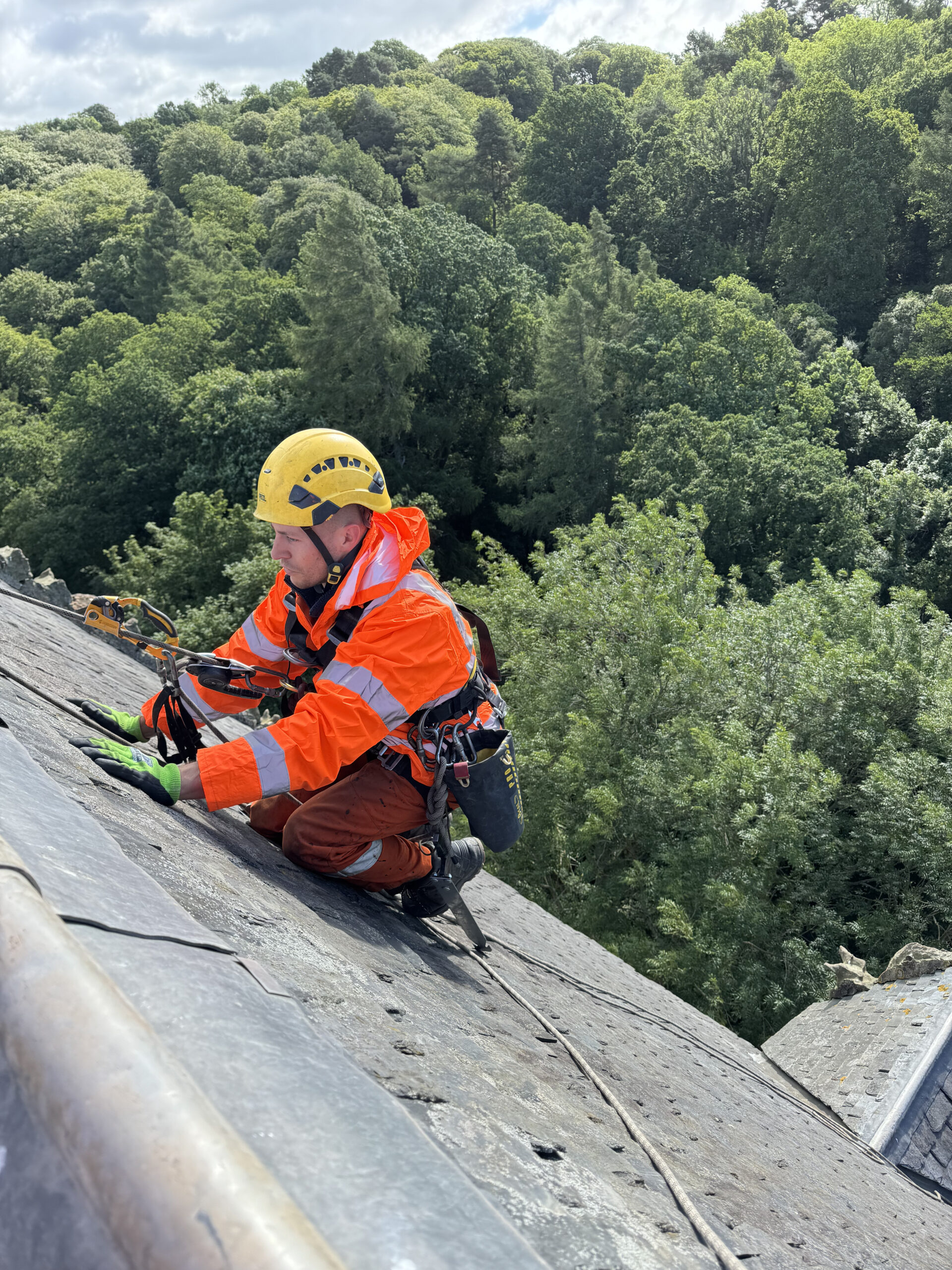
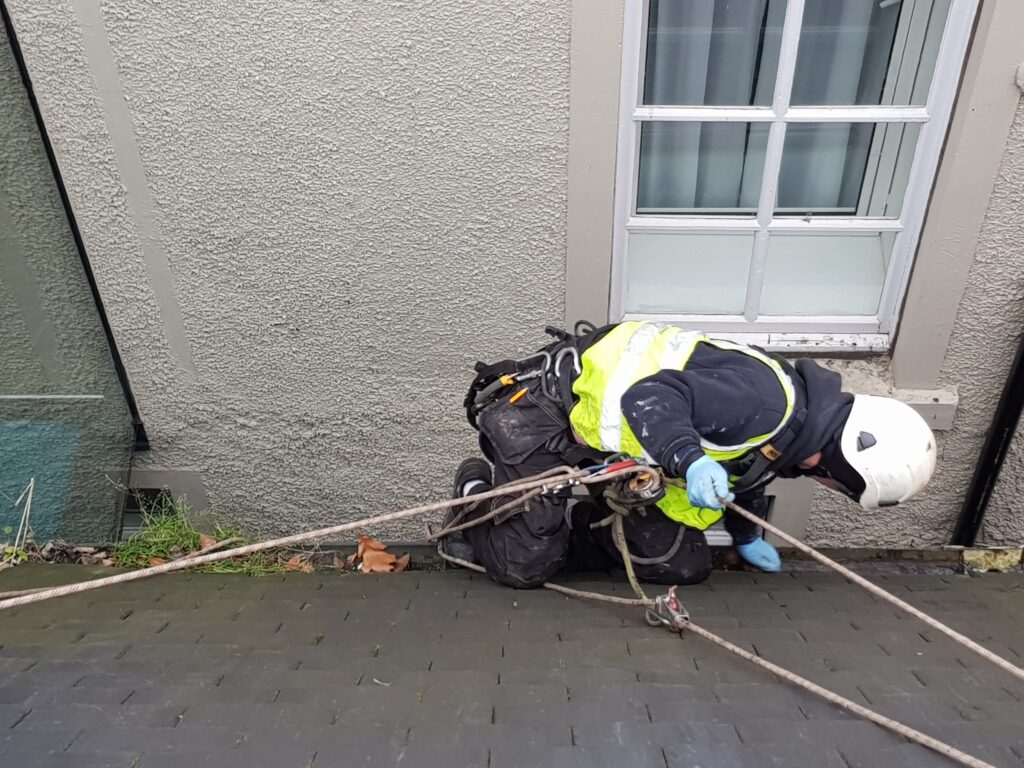
Rope Access Building Repairs in Edinburgh
Loose stone, failed pointing, cracked copes and damaged chimneys are common on Edinburgh’s older buildings, and they are often four or five storeys up. We inspect, make safe and repair high-level masonry by rope access without the cost and delay of scaffolding where the job suits it.
- Masonry & pointing
- Leadwork & gutters
- Facade make-safe
- Fully insured
Repairs we carry out by rope access
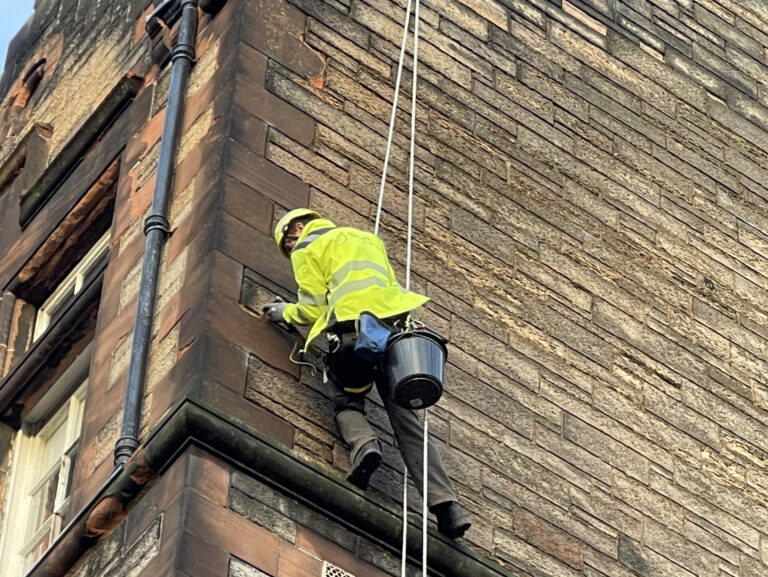
Lime pointing and repointing
Raking out failed or cement-based pointing and repointing in lime mortar, the correct material for traditional stone buildings.
Stone repairs
Repairing or replacing damaged stone, including mortar repairs and indents on cills, lintels and string courses.
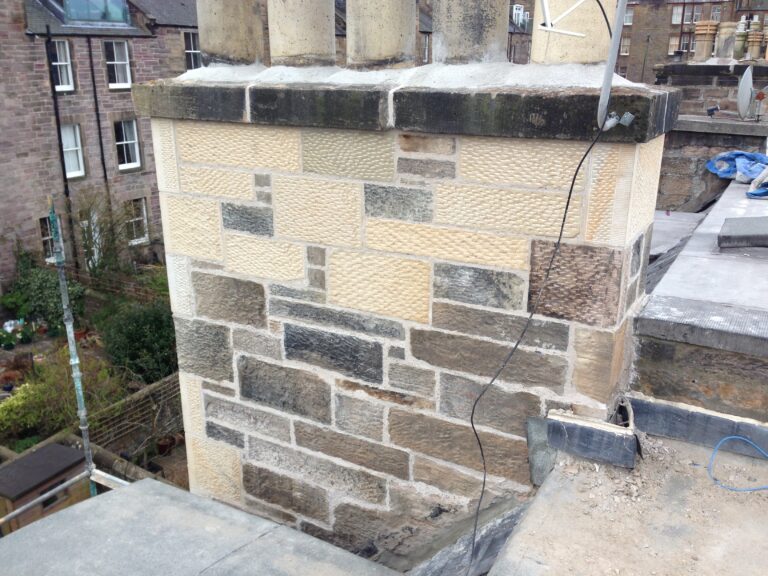
Chimney stacks
Repointing, flaunching, cope stones, pots and flashings. Major rebuilds usually need scaffolding.
Parapets and copes
Resetting loose copes and repairing parapet walls that are letting water into the building.
Making safe loose masonry
Removing or securing loose stone and debris that could fall onto a pavement, then quoting for a permanent repair. Read about falling masonry in Edinburgh.
Gutters, downpipes and high-level painting
See gutter repairs and gutter cleaning.
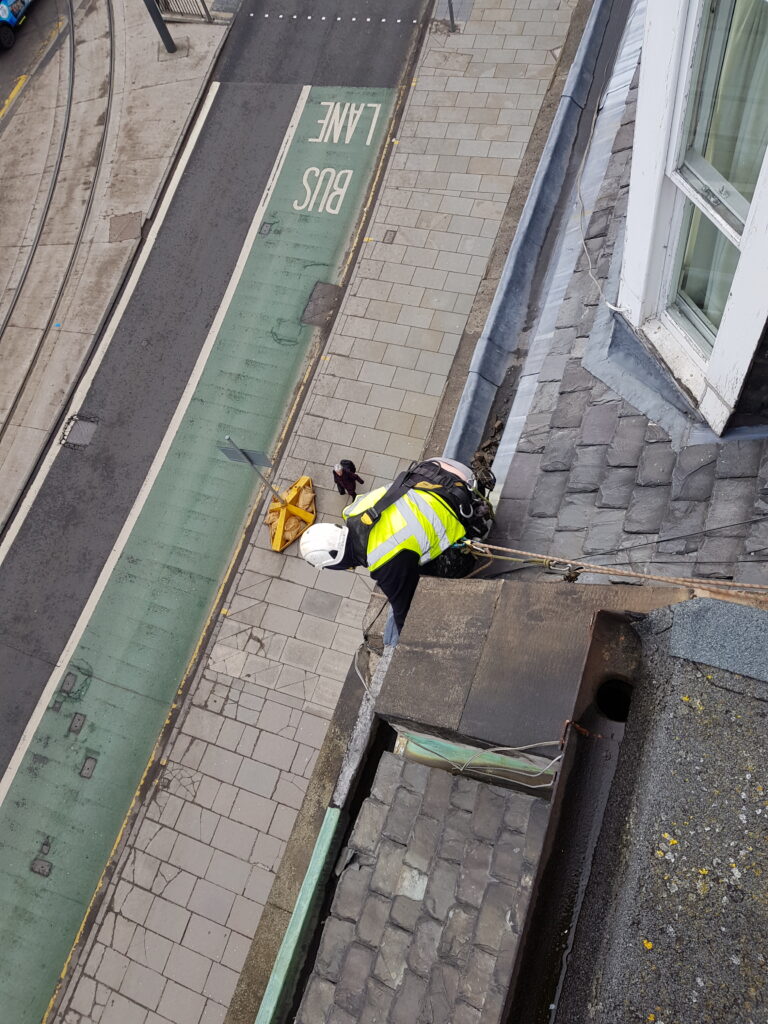
When rope access suits façade work
- localised repairs on tall elevations
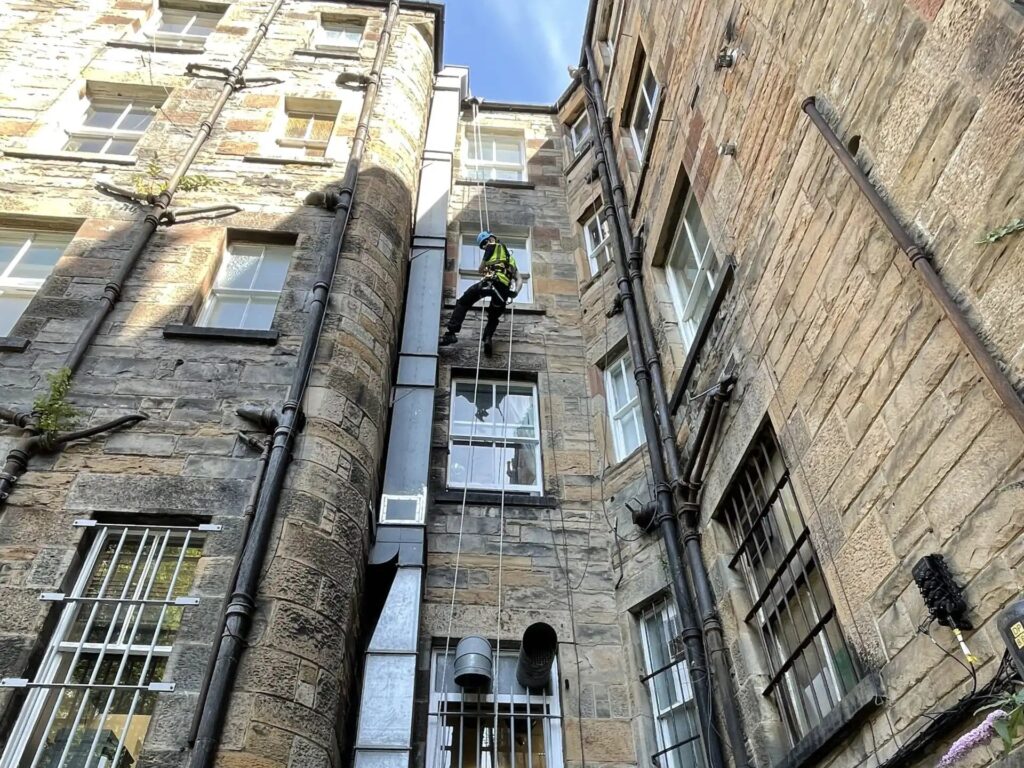
- rear elevations and areas over back greens or basements
- urgent make-safe work where scaffolding would take too long to arrange
- inspection to scope a larger repair
Large-scale repointing of a whole elevation or significant stone replacement is usually better done from scaffolding. We will advise which suits your building.
Listed buildings and conservation areas
We follow Historic Environment Scotland guidance on traditional materials, using lime mortars and matching stone. Some repairs to listed buildings may need consent, and we will tell you when to check with the council. See stonemasonry for more detail.
Safety and competence
Rope access technicians on our jobs are IRATA trained, and all rope access work is supervised by IRATA Level 3 technicians and carried out to the IRATA International Code of Practice. We hold £5 million public liability and £5 million employer’s liability insurance, and certificates are available on request.
We set up exclusion zones and public protection when working above pavements.
How a rope access repair runs
Survey
We look at the building and the anchor points, and confirm rope access is safe and suitable.
Quote
A written quote covering the repair, materials and access.
Plan
Risk assessment, method statement and an exclusion zone below the work.
Repair
Technicians reach the defect, carry out the repair and photograph it.
Report
Before and after photos and any further defects noted for you.
Clear up
Ropes, debris and barriers removed when the work is finished.
Rope access compared with scaffolding
For a short, localised repair on a tall building, scaffolding often costs more than the repair itself, and it can stay up for weeks and need a scaffold permit. Rope access is usually set up in hours, needs only a small, managed area below the work rather than a structure on the pavement, and comes down when the job is done. For long programmes of work, heavy materials or full elevation repairs, scaffolding is usually the better option, and we will tell you which suits your building.
Written quoteThe work, materials and access method explained
PhotosBefore and after photos of the work
GuaranteedWorkmanship guarantee confirmed in writing on your quote
£5 millionPublic liability and employer’s liability insurance
FAQs
Frequently asked questions
Do you need a permit for rope access?
There is no scaffold, so no scaffold permit. We still set up a controlled area below the work for public safety, and depending on the location this may need agreement from the council or the property owner. We check this when we plan the job.
Can you inspect the rest of the building while you are there?
Yes. While on the ropes we can photograph other areas of the elevation and report any further defects, so you can plan future work.
Can you repoint by rope access?
Yes, for localised areas. Repointing a full elevation is usually more efficient from scaffolding.
Who is responsible for repairs to a tenement façade?
Usually the owners who share it, according to the title deeds or the Tenements (Scotland) Act 2004. The council publishes shared repairs guidance for owners.
Can you make a building safe quickly?
If stone or slates are loose, call us. We will tell you straight away when we can attend to make it safe, so you can decide whether to contact the council in the meantime.
Related services
Get a quote
Tell us about the job and send a photo if you can. We cover Edinburgh and the surrounding areas.