
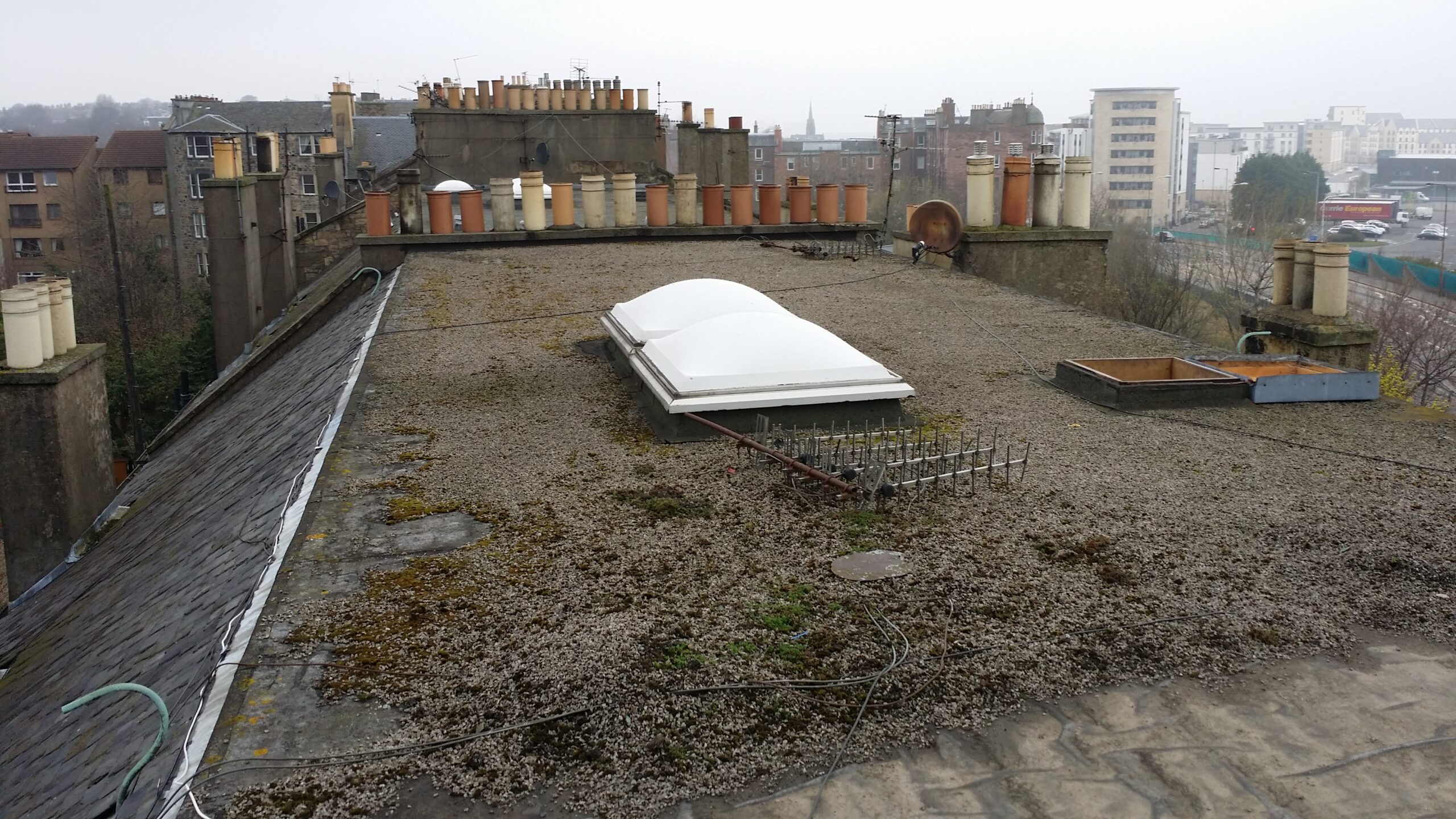
When a flat roof starts leaking, the natural reaction is to get it fixed quickly and cheaply. Sometimes a small, well-done repair is exactly right. But a cheap patch over a problem that has not been diagnosed often fails again, and the second repair usually costs more than doing it properly the first time.
Why cheap flat roof repairs rarely last
Many budget repairs cover the symptom rather than the cause. A patch or coating goes over the visible damage, but the water is still getting in somewhere else. Common causes of repeat leaks include:
- Poorly sealed joints and laps
- Standing water caused by blocked outlets or poor falls
- Materials that are not compatible with the existing roof
- Weak detailing at upstands, chimneys, parapets and walls
- Moisture trapped in the roof build-up, causing rot
The hidden cost of a repair that fails
Once water gets into a flat roof it can spread through the insulation and timber before it shows inside. By the time there is a stain on the ceiling, the damage underneath can be much wider than the leak suggests.
- Damp ceilings and stained paintwork
- Mould and musty smells
- Rotten timber decking or joists
- Damage to electrics near the leak
- Redecoration and disruption
Why flat roof repairs fail so often
- New material laid over wet or damaged layers
- Mixing materials that move differently
- Ignoring blocked outlets or poor drainage
- Rushed work at edges, upstands and flashings
Frost makes this worse. Water gets into a small gap, freezes, expands and opens the gap further, so a minor defect becomes a leak over a winter.
What a proper repair involves
- Inspect. Find where the water is actually getting in, which is not always above the stain.
- Explain. Tell you what is wrong and the options, with photos.
- Repair. Use materials compatible with the existing roof, and fix the drainage if that is part of the problem.
- Check. Make sure outlets run freely and the repair is sound before leaving.
If the roof covering has failed across large areas, or the deck underneath is soft, repair may not be worth it. See 5 key considerations when replacing your flat roof.
Signs your flat roof needs professional attention
- Damp or peeling paint on the ceiling below
- Cracks, blisters or bubbling in the roof surface
- Leaks after wind-driven rain or frost
- Water that is still lying on the roof days after rain
Ponding usually happens when outlets are blocked or the roof has lost its fall. Standing water softens the surface and frost and sun break it down until the waterproofing fails.
Repair or replace: a quick guide
A repair makes sense when the problem is local and the rest of the roof is sound. Replacement is usually better value when:
- the roof has been patched several times and still leaks
- the covering is cracked, brittle or blistered across large areas
- the deck is soft or rotten in more than one place
- water ponds across the roof because the falls are wrong
Questions to ask before you agree a repair
- Where exactly do you think the water is getting in, and why?
- Is the repair material compatible with the existing roof covering?
- Will the outlets and drainage be checked as part of the job?
- Will I get photos of the problem and the finished repair?
- What guarantee applies to the repair, and is it in writing?
A roofer who cannot answer these clearly is guessing, and a guess is what usually leads to the second repair.
Maintenance and insurance
Many insurers expect a property to be kept in reasonable repair, so maintenance records can help with a claim. Keeping outlets clear, having the roof checked periodically and keeping invoices and photos of repairs all help show the roof has been looked after. See roof maintenance.
Need a hand with this?
If your flat roof is leaking, or a previous repair has not lasted, we can find the cause and tell you whether repair or replacement makes sense. See our flat roofing page, or request a quote and send us a photo. You can also call 0131 235 1019.