
Stonemasonry
Stonemasonry in Edinburgh
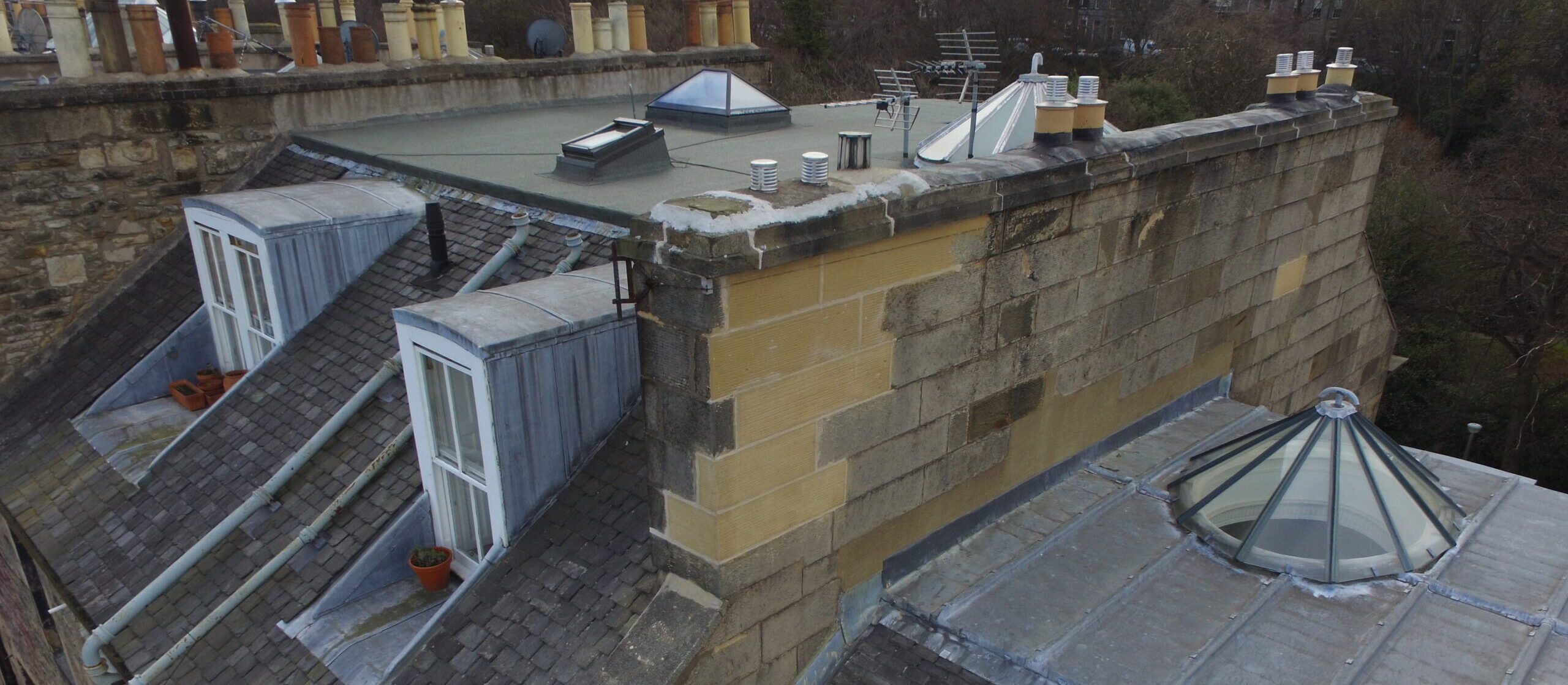
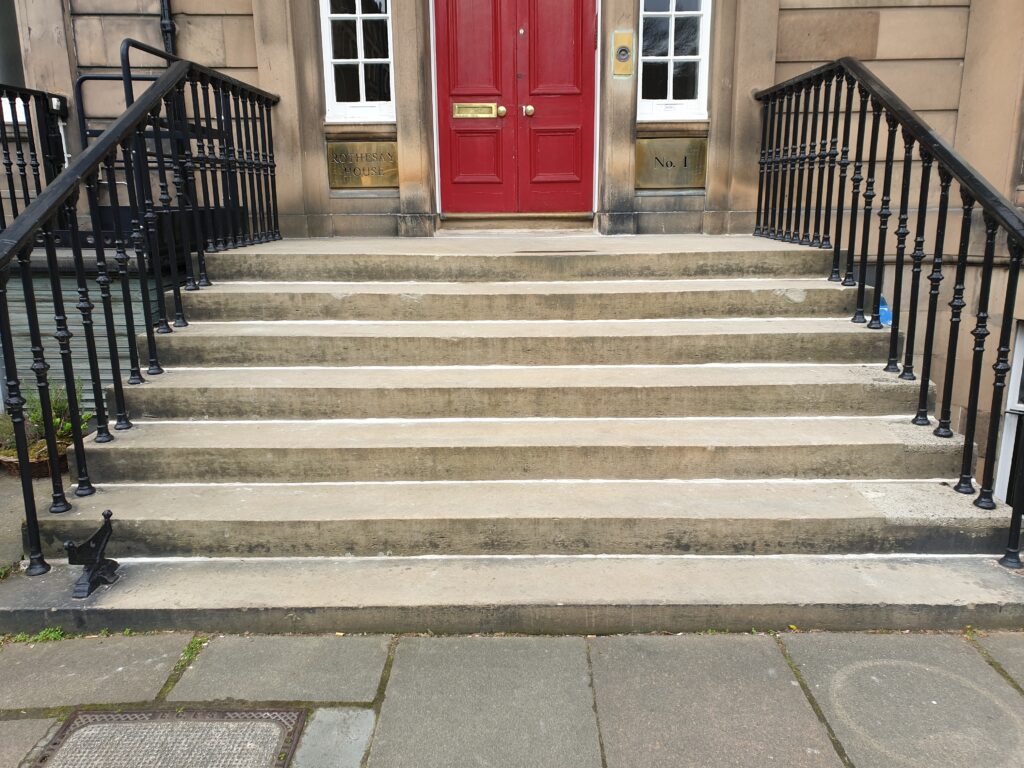
Edinburgh’s tenements, terraces and villas are built from sandstone laid in lime mortar. Repaired with the wrong materials, especially cement, stone decays faster. We carry out lime pointing, stone repairs and chimney and parapet work using traditional materials and methods.
- Lime pointing
- Chimneys & parapets
- Listed buildings
- Fully insured
Stonemasonry services
Lime pointing
Raking out failed or cement pointing and repointing in a lime mortar suited to the stone and exposure.
Stone repairs and replacement
Mortar repairs, indents and replacement stone matched as closely as possible to the original for colour and texture.
Chimney stacks
Repointing, rebuilding, cope stones, flaunching and pots. Chimney flashings are covered under roof repairs.
Parapets, copes and cornices
Resetting and repairing copes, parapet walls and cornice stones that are letting in water or at risk of falling.
Boundary and garden walls
Rebuilding and repointing traditional stone walls.
Why lime mortar matters
Lime mortar is softer and more breathable than the stone it holds. Moisture escapes through the joints, and the mortar, not the stone, takes the wear. On traditional sandstone walls, hard cement pointing traps moisture in the stone, which then spalls and decays. The right mortar depends on the stone, its exposure and how the wall was built, so the mix is chosen for each job. Historic Environment Scotland recommends lime for traditional masonry repairs, and we follow that guidance.
High-level masonry by rope access
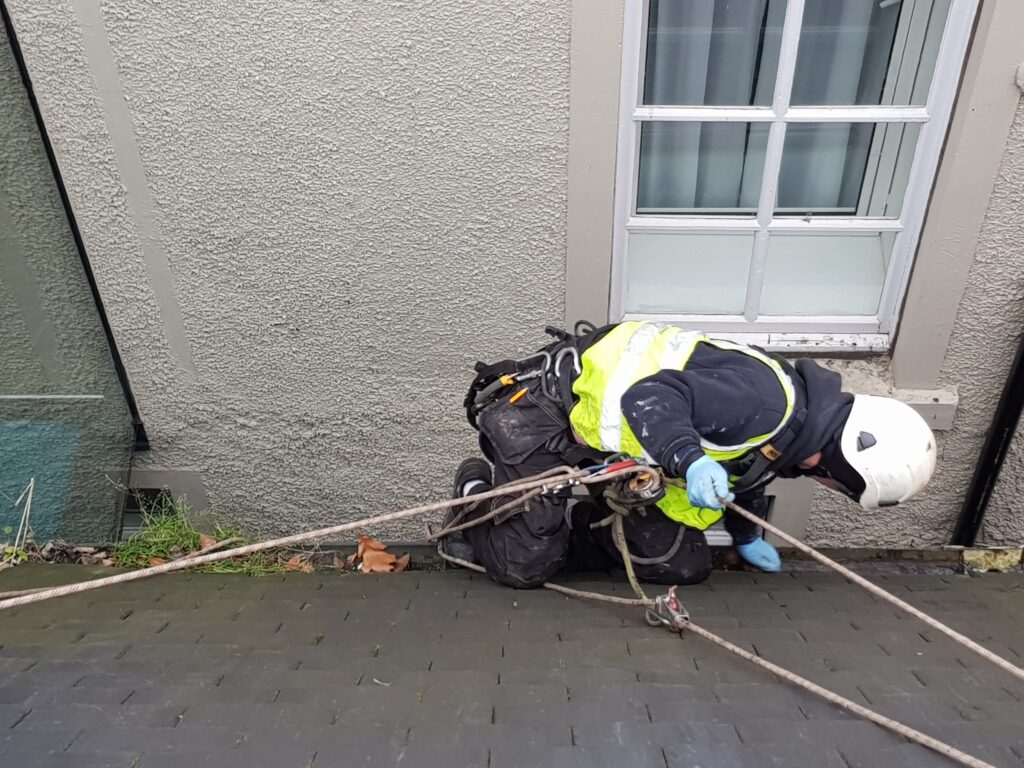
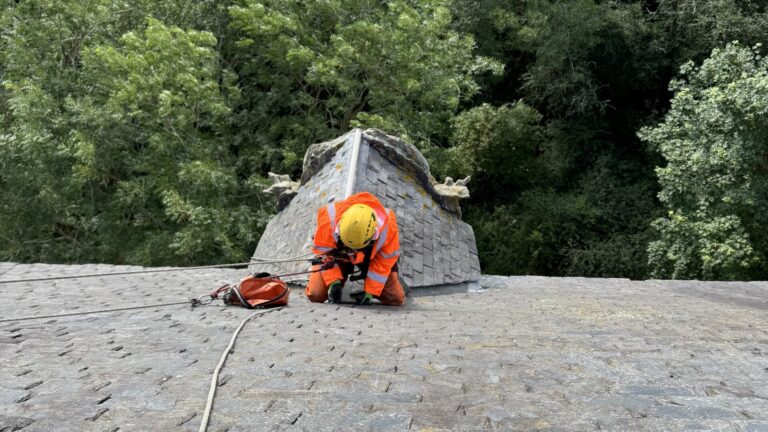
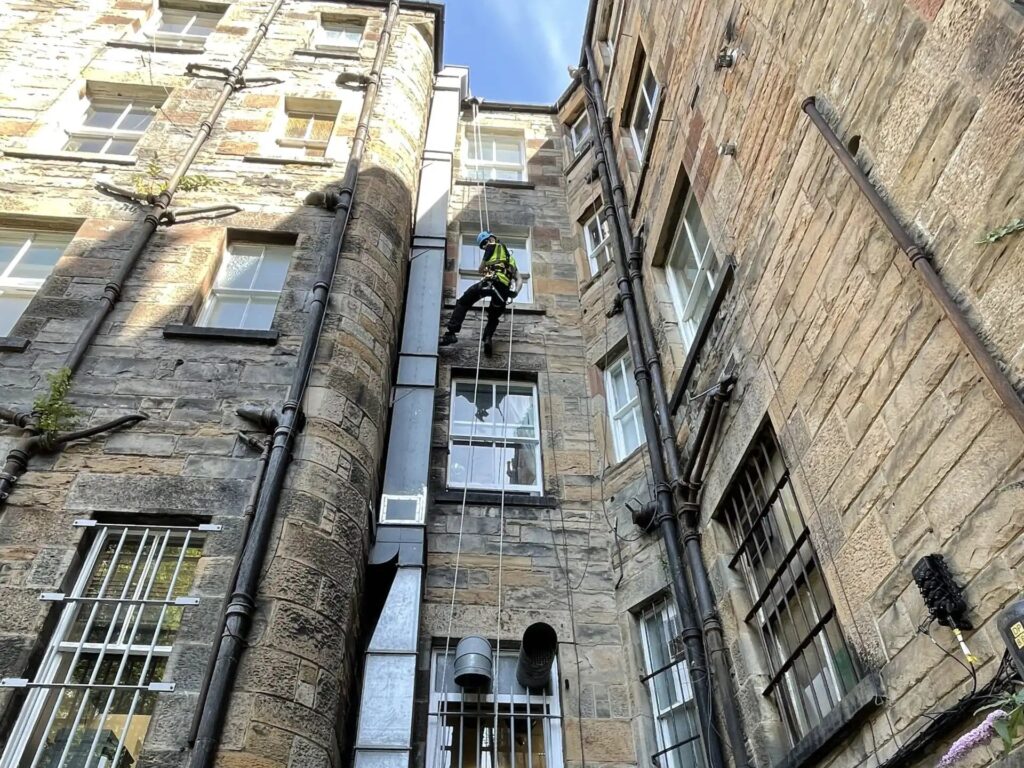
For chimneys, parapets and upper façades we can often work by rope access rather than scaffolding, which suits localised repairs and urgent make-safe work. Larger programmes are done from scaffolding.
Listed buildings and conservation areas
Repairs to listed buildings may need listed building consent, particularly where they change appearance or materials. The relevant legislation includes the Planning (Listed Buildings and Conservation Areas) (Scotland) Act 1997. Like-for-like repairs are usually straightforward, and we will tell you when you should check with the City of Edinburgh Council first.
How we work
Inspect
We assess the stone, pointing and cause of damage.
Quote
A written quote covering materials, method and access.
Repair
Carried out by experienced masons.
Report
Before and after photos.
Signs your stonework needs attention
Open or crumbling joints
Mortar that has washed out or turned to sand lets water into the wall. Repointing in lime stops the damage before the stone itself is affected.
Cement pointing
Hard cement pointing traps moisture behind it. The stone around it often starts to flake or crumble, so cement is usually raked out and replaced with lime.
Flaking or spalling stone
Sandstone that is delaminating or losing its face may need a mortar repair, an indent or a replacement stone, depending on how deep the decay goes.
Loose copes and cornices
Copes and cornice stones that move or have open joints let water in and can become a falling hazard. They are reset, repaired or pinned.
Damp inside
Damp patches on internal walls, especially at upper levels and around chimney breasts, often point to failed pointing, copes or flashings outside.
Stone on the ground
Fragments of stone on a pavement or in a back green are a warning sign. We can inspect and make safe, then quote for the permanent repair.
Tenements and shared stonework
Front and rear elevations, chimney stacks and parapets on a tenement are usually shared between owners. We provide written quotes with photos that every owner, or your factor, can see. Where a repair is high up and localised, it can often be done by rope access rather than scaffolding, which keeps the shared cost down.
Written quoteThe work, materials and access method explained
PhotosBefore and after photos of the work
GuaranteedWorkmanship guarantee confirmed in writing on your quote
£5 millionPublic liability and employer’s liability insurance
FAQs
Frequently asked questions
Is lime pointing more expensive than cement?
The material costs a little more and the work takes more care, but lime pointing protects the stone. Repairing stone damaged by cement pointing costs far more in the long run.
What is lime pointing?
Pointing the joints between stones with a lime-based mortar rather than cement. It lets the wall breathe and protects the stone.
How do I know if my stonework needs attention?
Open or crumbling joints, cement patches, flaking or crumbling stone, damp patches inside, or pieces of stone found on the ground.
Can you match my existing stone?
We source stone as close as possible in colour, grain and texture, and use mortar repairs where replacement is not justified.
What are the advantages of rope access for masonry?
For localised high-level repairs it avoids scaffolding hire and scaffold permits and is quicker to mobilise.
Do you charge for quotes?
Tell us about the job when you get in touch. Larger or heritage projects may need an inspection first, and we will tell you if there is a charge before we book it.
Related services
Get a stonemasonry quote
Tell us about the job and send a photo if you can. We cover Edinburgh and the surrounding areas.